

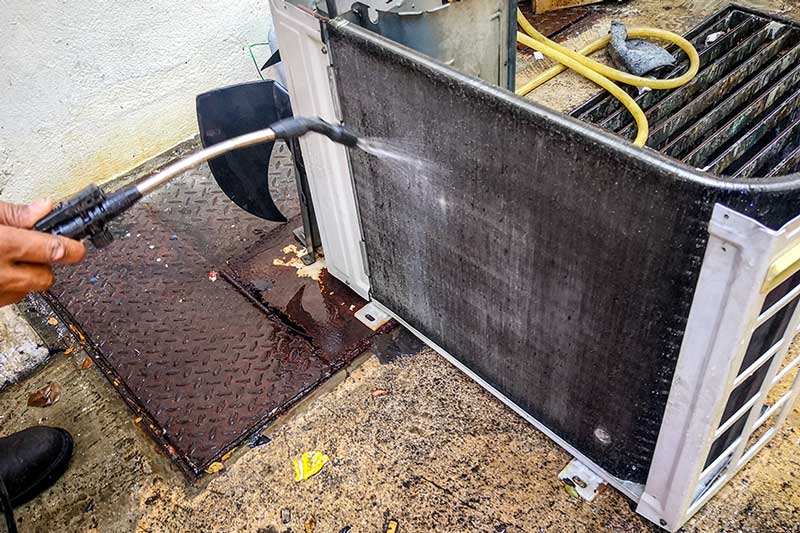
Your AC coils need cleaning when your system runs longer than usual, your home feels warm despite the AC running, indoor humidity climbs, or you notice ice forming on the coils or refrigerant lines. Rising energy bills and uneven cooling between rooms point the same direction. Dirty coils cannot transfer heat efficiently, so the system compensates by running harder and longer, which raises costs and shortens equipment life. A professional coil cleaning restores heat transfer and typically resolves all of these symptoms at once.
In our work throughout Franklin, coil contamination is one of the most common and most preventable causes of poor cooling performance. It builds gradually, which is exactly why homeowners tend to miss it until the system is clearly struggling.
What Are the Signs Your AC Coils Are Dirty?
The clearest signs of dirty AC coils are longer run times, a home that stays warmer than the thermostat setting, higher indoor humidity, ice buildup on the coils or refrigerant lines, unusual noises, and a rise in energy bills.
Start with performance. When dirt and debris accumulate on the coil surface, heat cannot move across it efficiently. The system responds by running longer to accomplish the same amount of cooling, and your energy costs rise accordingly. This is often the first thing homeowners notice, though it is easy to attribute to hot weather instead.
Humidity is the second clue and a telling one in Middle Tennessee. Air conditioning removes moisture as a byproduct of cooling. When the evaporator coil is dirty, the dehumidification drops off, and the house starts to feel muggy even at a reasonable temperature. If your home feels damp while the system runs steadily, coil condition is one of the first things worth checking.
Ice buildup on the coils or the refrigerant lines is a more serious indicator. It means airflow across the coil has been restricted badly enough to drop the coil temperature below freezing, and continuing to run the system in that condition risks damage to the compressor.
Unusual noises or an unfamiliar smell coming from the unit can also point to coil problems, particularly where moisture and organic debris have combined on the coil surface. Franklin properties with mature tree cover, common on the older lots near downtown and along the Harpeth River, see this more often because of the volume of pollen, seed material, and leaf debris that reaches the outdoor unit.
Regular attention through air conditioning services in Franklin catches coil contamination during a scheduled visit rather than during a failure, and it extends the working life of the system considerably.
How Are AC Coils Inspected?
AC coil inspection involves examining both the outdoor condenser coil and the indoor evaporator coil for dirt accumulation, fin damage, and restricted airflow. The two coils sit in very different environments and tend to develop different problems.
The outdoor condenser coil is the one most exposed to the elements. It collects leaves, grass clippings, pollen, cottonwood, and general yard debris, and in Franklin’s wooded neighborhoods that accumulation happens fast during spring and fall. Bent or crushed fins on this coil are also common, whether from landscaping equipment, hail, or general contact over the years. Bent fins restrict airflow just as effectively as dirt does.
The indoor evaporator coil is a different situation entirely. It sits inside the air handler, often in an attic or a tight mechanical closet, and it is not accessible without opening the equipment. Because it runs cold and wet during operation, it attracts and holds fine dust that passes through the filter, forming a layer that is dense and difficult to remove. In older Franklin homes where the air handler is tucked into an original closet space with limited clearance, reaching it properly requires the right tools and a technician who knows the equipment.
A proper inspection also includes checking airflow at the registers, verifying temperature split across the coil, and confirming the condensate drain is clear. Those measurements tell a technician whether the coil is actually the limiting factor or whether something else in the system is responsible. Skipping straight to cleaning without measuring can mean addressing the wrong problem entirely, which is why expert AC repair starts with diagnosis rather than assumption.
How Do Dirty Coils Affect Efficiency?
Dirty coils reduce efficiency by restricting airflow and blocking heat transfer, which forces the system to run longer cycles and consume more energy to reach the same temperature. The effect compounds over a cooling season.
Clogged coils mean your air conditioner works harder for less result. That extra strain raises your energy bills every month, and it accelerates wear on the compressor, blower motor, and other components. You may notice the system running long cycles, cooling unevenly, or leaving some rooms uncomfortable while others feel fine.
The longer-term cost is the one homeowners tend to underestimate. A system running under constant strain reaches the end of its service life years earlier than a well-maintained one. In practical terms, neglected coils can be the difference between replacing equipment at year 15 and replacing it at year 10, which is a substantial financial gap.
If your system struggles to hold your desired temperature, coil condition should be near the top of the list of suspects. Addressing it promptly improves performance immediately, reduces operating cost, and protects the equipment. Homeowners enrolled in our residential maintenance program have their coils checked and cleaned as part of scheduled service, which removes the guesswork from the whole equation.
What Can Franklin Homeowners Do Between Professional Cleanings?
Between professional cleanings, the most valuable things a homeowner can do are change the air filter on schedule, keep the area around the outdoor unit clear, and pay attention to changes in system performance. These three habits protect coil condition more than anything else.
Filter changes matter most. A clean filter is the primary defense keeping fine dust off the evaporator coil, and letting it load up is the fastest way to contaminate the coil you cannot reach. Check it monthly during heavy cooling months and replace it as needed rather than on a fixed schedule, since load varies with pets, pollen, and occupancy.
Around the outdoor unit, maintain at least two feet of clearance on all sides. Trim back shrubs, clear leaf litter, and keep grass clippings from blowing into the cabinet during mowing. In Franklin neighborhoods with heavy tree canopy, this is worth doing seasonally rather than once a year.
Coil cleaning itself is a different matter. Detergents, pressurized water, and coil cleaning chemicals can bend fins, force debris deeper into the coil, or damage electrical components if applied incorrectly, and the evaporator coil generally is not reachable without partially disassembling the air handler. This is genuinely the point where the work should move to a technician with the correct equipment and cleaning agents for your coil type.
The most effective approach is straightforward. Handle the filter and the clearance yourself, and have the coils properly cleaned and inspected as part of a seasonal AC tune-up. That combination keeps the system efficient without risking damage to it.
When Should You Call in the Experts for AC Coil Issues?
Call a professional when your AC is not cooling efficiently, you hear unusual noises, you see ice on the coils or lines, or performance has not improved after routine filter and clearance maintenance. Any of these means the problem is beyond routine upkeep.
Ignoring these signs leads predictably to higher energy bills and eventually to system failure, often at the worst possible point in the season. Ice on the refrigerant lines in particular should prompt a call rather than a wait, because running a system in that condition can damage the compressor.
There is also value in calling before anything is obviously wrong. Based on what we see in Franklin homes, a coil cleaning scheduled in spring, ahead of the first sustained heat, prevents most of the mid-summer service calls we receive. The equipment enters the demanding part of the year in the condition it needs to be in.
Parthenon Plumbing, Heating, & AC Repair has served Middle Tennessee since 2008, and our licensed technicians bring over 150 years of combined experience to diagnosing what is actually limiting your system’s performance. We provide upfront, competitive pricing with no hidden fees, so you know what the work involves before it starts.
Keeping Your Franklin Home Cool All Season
Coil cleaning is one of those quiet things that makes a real difference and is very easy to put off. The signs are consistent and easy to spot: longer run times, a house that will not quite cool, air that feels muggy, ice on the lines, or a bill that keeps creeping up. None of them are cause for alarm, and all of them are worth a call.
We will handle the rest. That means honest pricing with the cost up front and no hidden fees, expert solutions from licensed technicians with over 150 years of combined experience, and unmatched care in a home we treat like a neighbor’s. If your AC is not doing what it used to, schedule your appointment today and we will have it ready before the next stretch of Tennessee heat. Service That Stands the Test of Time is what we aim to leave behind.
Frequently Asked Questions
How often should AC coils be cleaned in Franklin, TN?
Most Franklin homes benefit from professional coil cleaning once a year, typically in spring before the cooling season begins. Properties with heavy tree cover, nearby construction, pets, or a system that runs close to continuously through summer may need attention twice a year. The outdoor condenser coil generally accumulates debris faster than the indoor evaporator coil because of its direct exposure to the yard.
Can dirty coils cause my AC to freeze up?
Yes. Dirty evaporator coils restrict airflow across the coil surface, which drops the coil temperature below freezing and causes ice to form on the coil and refrigerant lines. Once ice forms, cooling capacity drops sharply and the compressor is at risk. If you see ice, turn the system off and have it evaluated rather than continuing to run it.
Does cleaning AC coils actually lower energy bills?
It does, and the effect is often noticeable within the first full billing cycle. Clean coils transfer heat efficiently, so the system reaches your setpoint in shorter cycles and draws less power to do it. The size of the improvement depends on how contaminated the coils were, but homes that have gone several seasons without a cleaning typically see the most significant change.
Is coil cleaning included in a regular AC tune-up?
Coil inspection and cleaning are standard parts of a thorough maintenance visit, along with checking refrigerant charge, testing electrical components, verifying airflow, and clearing the condensate drain. Bundling it into scheduled maintenance is generally the most cost-effective approach, since the technician is already at the equipment and can address multiple items in one visit.
