
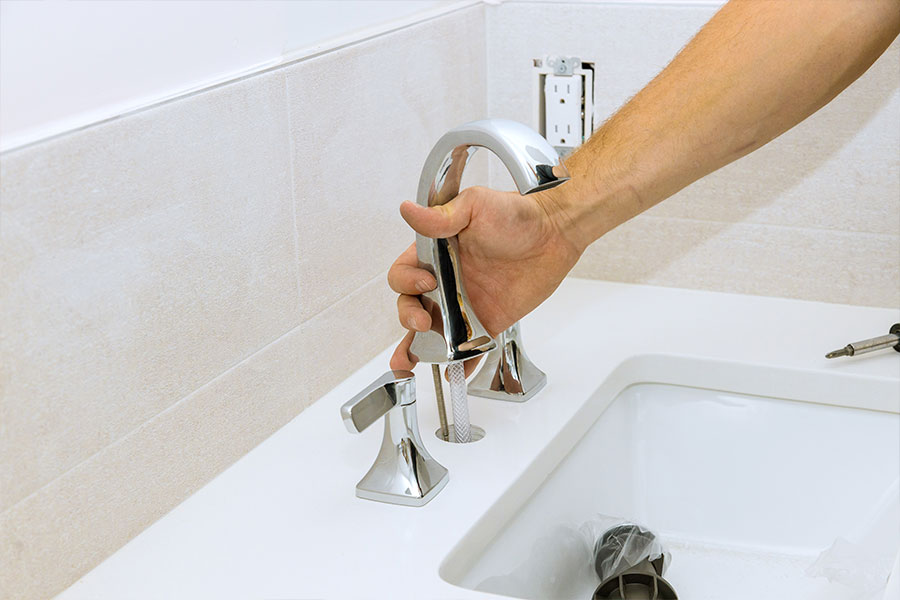
A dripping faucet, weak water flow, and a leak around the handle are all signs that something inside the fixture has worn out or that pressure somewhere in your home’s plumbing has changed. Most of the time, these are small, fixable problems. Occasionally, they are the first visible sign of aging supply lines behind the wall. Either way, you do not need to diagnose which one you are dealing with. Knowing what the signs mean is enough, and a licensed plumber can take it from there.
If you have been listening to a drip for a few weeks and wondering whether it is worth calling someone about, you are not alone. It is one of the most common things Nashville homeowners ask us about, and the answer is almost always yes, because small faucet problems are inexpensive to solve and get more expensive the longer they run.
What Is a Dripping Faucet Telling You?
A steady drip means a seal inside the faucet is no longer closing completely. That seal is a small, inexpensive part, and replacing it usually resolves the problem entirely.
What makes a drip worth paying attention to is what happens when it is left alone. Water moving constantly past a worn seal slowly erodes the surface it presses against. Once that surface is damaged, the fixture will keep dripping no matter how many times the seal is replaced, and the repair becomes a larger one.
There is also the water itself. A faucet dripping around the clock adds up to a surprising volume over a month, and it shows up on your bill quietly enough that most people never connect the two.
In our work throughout Nashville, we see this most often in the older homes around East Nashville and Sylvan Park, where the original fixtures have been in service for decades. Middle Tennessee water carries mineral content from the region’s limestone, and over the years, that mineral buildup wears on seals faster and makes older fixtures more delicate to work on.
None of this is cause for alarm. It simply means a drip is worth a phone call rather than a wait. Our licensed plumbers across Nashville handle this kind of repair every day, and knowing which part actually failed is the difference between fixing it once and fixing it three times.
What Do the Most Common Faucet Problems Mean?
The three problems Nashville homeowners notice most are dripping, reduced flow, and water appearing around the handle. Each one points somewhere different.
- A dripping spout means an internal seal has worn past the point of closing tightly. This is the most common faucet complaint and usually the simplest to resolve.
- Weak or reduced flow at one faucet usually means mineral buildup has restricted the opening at the spout. If the flow is weak at every faucet in the house, the cause is somewhere in the supply system instead, which is a different conversation.
- Water around the handle means a seal beneath the handle has failed. It is worth attention because the water runs down into the cabinet and onto the countertop seam rather than into the sink.
Here is the part worth knowing: the simple version and the complicated version of each of these look identical from the outside. A drip caused by a worn seal and a drip caused by a damaged valve surface look exactly the same. Weak flow from mineral buildup and weak flow from a failing supply line look the same at that one fixture.
That is not something a homeowner should be expected to sort out, and it is exactly why a proper look matters more than the repair itself. A whole home plumbing inspection tells you whether what you are seeing is one tired fixture or an early sign of something more general, so you can make a decision with real information rather than a guess.
What Causes Low Water Pressure at a Faucet?
Low pressure at a single faucet almost always means something is restricting flow right at that fixture. Low pressure throughout the house points to your supply system instead.
That distinction is the most useful thing to notice, and it is easy to observe. Run a few different faucets and see whether the problem follows you. If one sink is weak while the rest are fine, the issue is local. If the whole house is soft, the cause is upstream.
Mineral buildup is the usual local culprit in Middle Tennessee. Our water leaves deposits that accumulate gradually at the spout, and on a frequently used kitchen faucet, that buildup becomes noticeable within a year or two.
Whole-house pressure changes have other explanations. Sometimes a valve has been partially closed during other work and left that way. Sometimes a pressure regulator has quietly reached the end of its life. In many older Nashville homes, the answer is aging galvanized supply piping, which narrows internally over decades as corrosion builds up along the inside of the pipe.
That last one sounds worse than it is. It is a well-understood condition with a straightforward solution, and it does not happen overnight. When aging supply lines turn out to be the cause, pipe repair and replacement restore the flow properly rather than working around the restriction.
Chronic low pressure is your home telling you something, and it is worth listening to. It rarely resolves on its own, and understanding the cause puts you back in control of the decision.
When Should You Call a Professional About a Faucet?
Call when a leak keeps coming back, when low pressure affects the whole house, when you hear knocking or hissing in the walls, or when water is collecting under the sink.
- A leak that returns: If a faucet was repaired and started dripping again, the underlying cause has not been addressed yet. That usually points to a damaged valve surface or a fixture that has simply reached the end of its useful life.
- Low pressure everywhere: Pressure that is soft throughout the house is a supply-side question, and answering it requires looking at the piping rather than the fixture.
- Unusual sounds: Knocking or hissing behind the walls when water runs is worth having checked. It usually points to pressure that is running higher than it should be, which is hard on every joint and connection in the house.
- Water under the sink: Water pooling in the cabinet is coming from a connection rather than the spout, and it does quiet damage to cabinetry and flooring while everyone is watching the faucet above.
There is one more situation worth naming honestly. When a fixture is old enough that replacement parts are hard to find, or when several things are wearing out at once, another repair is not the better value. Looking at current replacement faucet options is often the more sensible path, and a good plumber will tell you that rather than selling you a third repair.
Working with neighbors across Nashville, the most expensive faucet problems we see are almost always the ones that were patched several times before anyone looked at what was actually wrong.
What Does Professional Faucet Service Look Like?
A proper service call starts with finding out what actually failed, followed by a clear explanation of your options and what each one costs before any work begins.
That sequence matters. Knowing whether you are looking at a worn seal, a damaged valve, or a supply line issue changes both the repair and the price, and you should have that information before you decide anything.
Honest pricing is the part homeowners tell us they appreciate most. You get the cost up front, with no hidden fees and no surprises added at the end. If the more affordable option is the right one for your home, that is the one we will recommend.
Expert solutions come from experience with the specific conditions here. Our licensed technicians bring over 150 years of combined experience, and they have worked on Nashville’s full range of housing, from century-old homes with original plumbing to new construction. That familiarity means fewer surprises and fewer return visits.
Unmatched care shows up in the smaller things. Explaining what we found in plain language. Cleaning up properly. Treating your home the way we would want ours treated. We have served this community since 2008, and we would rather earn a neighbor for the next twenty years than win a single service call.
Getting Your Nashville Faucet Working the Way It Should
A drip is a small thing that is easy to live with and easy to underestimate. It is also one of the least expensive problems to solve, and it tends to be the one your home mentions first when something upstream is starting to change. You do not need to work out which situation you are in. Noticing the signs and making one call is genuinely enough. If a faucet in your home has been asking for attention, get in touch with our team and we will sort out what it needs. Service That Stands the Test of Time is what we aim to leave behind in every Nashville home we work in.
Frequently Asked Questions
Is a dripping faucet worth calling a plumber about?
Yes, and it is one of the more affordable calls you can make. A drip caught early is usually a small internal part. Left running for months, the constant flow can wear the surface that part seals against, which turns a minor repair into a larger one. The wasted water adds up quietly on your bill in the meantime.
Why does my faucet drip again after it was repaired?
The most common reason is that the surface the seal presses against was already worn, so a new seal wears out quickly against it. This is fixable, but it requires addressing the valve rather than the seal. A second possibility is that the replacement part was not an exact match, since faucet internals differ quite a bit between manufacturers.
Does Nashville water affect faucets?
Middle Tennessee water carries mineral content from the region’s limestone, which leaves deposits inside faucets over time. It will not damage a fixture quickly, but over a decade, it wears on seals and gradually restricts flow at the spout. Homes with noticeable buildup sometimes benefit from a water softening system, which helps every fixture in the house rather than one at a time.
Should I repair or replace an older faucet?
Repair usually makes sense when one part has worn out and the fixture is otherwise solid. Replacement tends to be the better value when parts are hard to source, when several components are wearing out together, or when the leak is coming from the body of the fixture rather than a seal. A plumber should give you the cost of both paths so the choice is yours.