
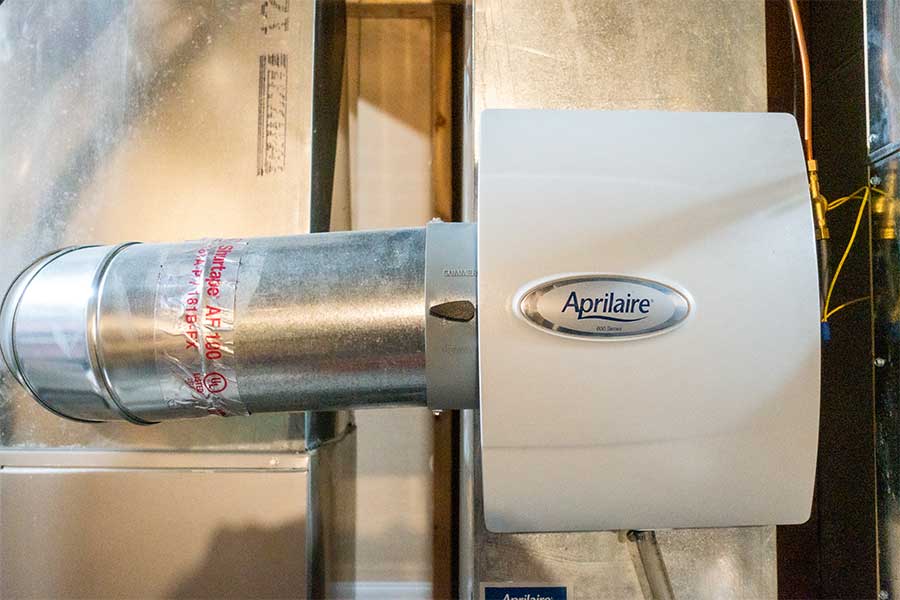
A whole-house humidifier is worth it for Franklin homeowners because it maintains indoor humidity between 30 and 50 percent through the winter heating season, when furnaces strip moisture from the air. That range reduces dry skin, irritated sinuses, and static electricity, protects hardwood floors and wood furniture from cracking, and makes the same thermostat setting feel warmer. Unlike portable units, a whole-house system integrates with your existing HVAC equipment and treats every room quietly and automatically.
In our work throughout Franklin, the homes that benefit most are the older properties with original hardwood and millwork, where winter dryness does damage that is expensive and sometimes impossible to reverse. Homeowners often raise it while we are already on site for heating services in Franklin, TN, since the furnace and the dryness are directly connected.
How Do Whole-House Humidifiers Improve Comfort and Health in Tennessee?
Whole-house humidifiers improve comfort and health by holding indoor moisture in the range where the human body and the building both function well. Both extremes cause problems, and Tennessee homes swing between them across the year.
High humidity in summer makes a space feel sticky and supports mold and dust mite growth. Low humidity in winter produces the opposite set of problems: dry skin, cracked lips, irritated sinuses, nosebleeds, and a persistent scratchy throat that many people attribute to a cold that never quite develops.
A whole-house humidifier addresses the winter side. Maintaining balanced moisture, it improves indoor air quality and reduces the respiratory irritation that dry heated air causes. People with asthma or seasonal allergies frequently notice the difference within the first week.
Dry air also carries more static electricity, which is more than a nuisance in homes with sensitive electronics.
Beyond health, proper humidity protects the house itself. Wood floors, furniture, cabinetry, and trim all lose moisture in dry conditions, and the resulting shrinkage produces gaps, cracks, and separated joints. Franklin’s historic homes near downtown Main Street, many with original heart pine flooring and period millwork, are exactly the properties where this damage matters most and costs the most to correct.
The system works best when the heating equipment feeding it is in good condition, which is why pairing installation with seasonal furnace maintenance makes practical sense.
What Are the Benefits of a Whole-House Humidifier for Franklin Homes?
The main benefits are improved winter comfort, protection for wood floors and furniture, quieter and lower-maintenance operation than portable units, reduced respiratory irritation, and the possibility of lower heating costs.
Comfort improves most noticeably during the coldest months, when indoor air becomes driest. Balanced humidity reduces the skin and sinus irritation that makes winter uncomfortable indoors.
Structural and furnishing protection is the benefit homeowners tend to appreciate most after the fact. Low humidity causes hardwood floors to gap and cup, solid wood furniture to develop cracks, and door and window frames to shift. Once a floor has separated, restoring it is a refinishing job rather than a humidity adjustment.
Whole-house systems integrate with your existing HVAC equipment, so there are no bulky standalone units taking up floor space, no tanks to refill daily, and no unit running loudly in a bedroom. They operate quietly and continuously.
Energy cost is the benefit worth explaining rather than just claiming. Humidified air feels warmer at the same temperature, which means many households find they can lower the thermostat a degree or two without feeling any colder. That reduces heating runtime across the season.
Getting the benefits requires correct sizing and integration, which is where whole house humidifier installation by a licensed technician matters. An undersized unit runs constantly without reaching target, and an oversized one creates condensation problems.
How Do You Select the Right Whole-House Humidifier?
Selecting the right humidifier depends on your home’s square footage, the humidifier type, maintenance requirements, energy efficiency, and available features. Sizing is the single most consequential decision.
Assess your home’s size against the unit’s rated capacity. A humidifier that is too small will never reach the target level and will run continuously trying. One that is too large introduces excess moisture, which creates condensation on windows and inside wall cavities, and that causes exactly the mold problems you were trying to avoid in summer.
Consider the type. Steam, evaporative, and flow-through systems each work differently. Flow-through and evaporative units are common for residential HVAC integration and generally simpler to maintain. Steam units produce more moisture and suit larger homes but consume more energy.
Maintenance requirements vary meaningfully between models. Some need a water panel replaced once or twice a season, while others require more frequent attention. Franklin’s water carries mineral content from the region’s limestone geology, which accelerates scale buildup and makes maintenance interval a genuine consideration rather than a specification footnote.
Energy efficiency affects operating cost across a full heating season, which is long enough for the difference to matter.
Look for a built-in humidistat that maintains the target level automatically rather than requiring manual adjustment as outdoor conditions change. Programmable settings are worth having for the same reason.
An assessment of your specific home is what makes these decisions straightforward instead of speculative.
What Should You Expect With Humidifier Installation and Maintenance?
Installation typically takes a few hours and involves integrating the humidifier with your existing HVAC system, connecting a water supply, and setting up drainage. Maintenance means replacing the water panel every 6 to 12 months and monitoring humidity levels.
During installation, a technician evaluates your HVAC system, determines the best mounting location on the supply or return side, connects the water line, arranges drainage, and wires the humidistat. On most systems, the work is completed in a single visit.
After installation, the maintenance routine is straightforward. Replace the water panel every 6 to 12 months, depending on usage and water hardness. Given Franklin’s mineral content, the shorter end of that range is realistic for many homes. Periodic cleaning prevents mineral buildup from restricting the unit’s output.
Monitor humidity and aim for 30 to 50 percent. Below that range, you lose the benefits. Above it you risk condensation and mold growth, which is a real concern in Middle Tennessee homes where wall assemblies were not built for high indoor humidity in cold weather.
A separate hygrometer placed away from the humidifier gives you an honest reading of what the house is actually doing, which is worth having as a check on the built-in humidistat.
Some Franklin homeowners pair humidity control with UV air purifier installation, particularly in homes where indoor air quality is already a concern. Humidity control and biological contaminant control address different problems, and combining them covers more ground than either does alone.
Reach out to a professional if performance drops or you are unsure whether your levels are where they should be.
Why Can You Count on Us for Your Humidifier Needs?
Parthenon Plumbing, Heating, & AC Repair brings over 150 years of combined team experience to Franklin homes, with licensed technicians who assess your specific situation before recommending equipment.
We have served Middle Tennessee since 2008, and our approach to indoor air quality is the same as our approach to everything else: understand the actual problem, explain the options honestly, and install the solution correctly.
You get instant online quotes and transparent pricing with no hidden fees, so the cost is clear before work begins. Our satisfaction-guaranteed service is backed by technicians who do this work regularly rather than occasionally.
We also handle the follow-through. A humidifier is a system that needs periodic attention, and having the same team that installed it handle the maintenance means somebody knows your configuration, rather than starting from scratch each visit.
Getting Winter Humidity Right in Your Franklin Home
It is easy to accept winter dryness as simply part of the season, and it does not have to be. The dry skin, the static, the scratchy throat, and the gaps opening between floorboards all come from the same cause, and one system addresses all of it.
Franklin’s older homes with original wood floors and trim have the most to gain, though every house running a furnace through a Tennessee winter is losing moisture it would rather keep. You get honest pricing with the cost known before we start and no hidden fees, expert solutions from licensed technicians with over 150 years of combined experience who will size the unit to your home, and unmatched care from a company that has served Franklin since 2008. When you are ready for a more comfortable winter, contact our team today. Service That Stands the Test of Time is what we want your home to hold onto.
Frequently Asked Questions
What humidity level should I maintain in winter?
Aim for 30 to 50 percent relative humidity during the heating season, and lean toward the lower end during the coldest weather. When outdoor temperatures drop well below freezing, humidity above 40 percent can cause condensation on windows and inside wall cavities. A humidistat that adjusts based on outdoor temperature handles this automatically, which is one of the more useful features to look for.
Will a whole-house humidifier cause mold problems?
Not when it is correctly sized and set. Mold risk comes from over-humidification, which happens with oversized units, manual settings left too high, or systems without a functioning humidistat. Keeping levels within the 30 to 50 percent range and watching for condensation on windows are the two practical safeguards. If you see persistent window condensation, lower the setting.
How is a whole-house humidifier different from a portable one?
A whole-house unit integrates with your HVAC system and treats the entire home automatically, drawing water from a plumbed supply rather than a tank you refill. Portable units treat one room, require daily refilling, and run audibly in the space they are humidifying. For a whole home, particularly a larger one, the portable approach means running several units and still not reaching consistent coverage.
Do I need a humidifier if my Franklin home is newer construction?
Newer homes are built more tightly, which reduces air exchange and can mean somewhat better moisture retention in winter. That said, any home running a furnace through a Tennessee winter loses humidity, because heating air lowers its relative humidity regardless of how well the house is sealed. Newer homes often need less humidification capacity rather than none, so sizing the unit correctly matters even more.