

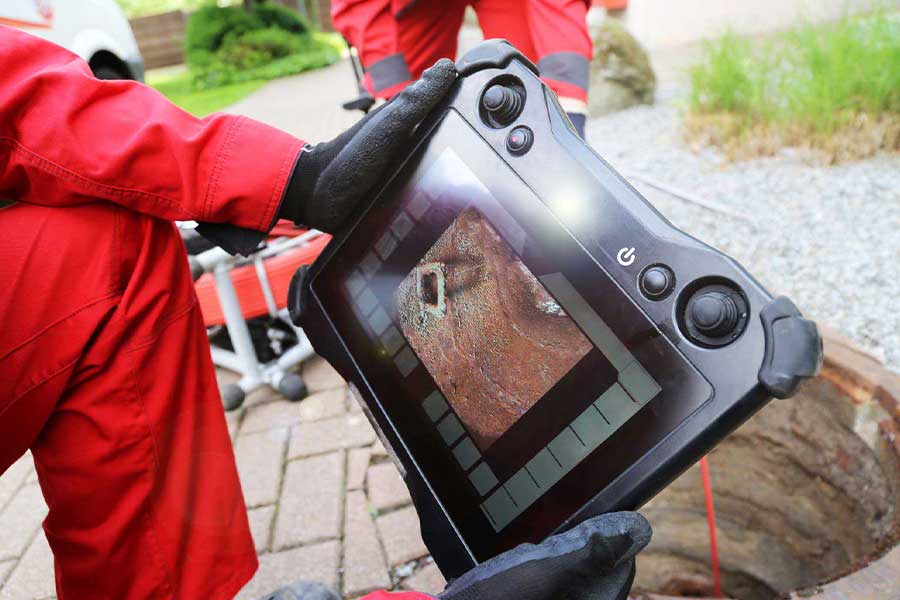
Your home needs a pipeline camera inspection when you notice water stains on walls or ceilings, gurgling pipes, unexplained wet spots in the yard, a rising water bill, recurring clogs, fluctuating water pressure, persistent odors, changes in water quality, or plumbing issues following a renovation. A camera inspection sends a video line into the pipe itself, which shows the actual condition of the interior rather than inferring it from symptoms. That distinction matters because the visible symptom and the underlying cause are frequently in different places.
Based on what we see in Crieve Hall homes, the neighborhood’s 1950s and 1960s construction means many properties still have original cast iron and clay drain lines. Those materials have a service life, and most of them are now well into it.
What Are the Common Signs of Pipeline Issues in Your Home?
The most common indicators of a pipeline problem are water stains on walls or ceilings, gurgling noises from the pipes, mold or mildew growth, unexplained drops in water pressure, musty odors, and drains that clog or run slow repeatedly.
Water stains are the most direct evidence. Discoloration on a ceiling or wall means water has been present long enough to leave a mark, which is rarely the first day of the problem.
Gurgling from the pipes indicates air moving through the system where it should not be, usually because a partial blockage or a venting issue is disrupting normal flow.
Increased mold or mildew growth points to sustained moisture, and a musty smell often arrives before anything is visible. Both signal that water is reaching a place it was never meant to.
An unexpected drop in water pressure suggests a leak or a restriction somewhere in the supply system. Frequent clogs and slow drains suggest the problem is on the drain side instead.
None of these symptoms tell you where the problem actually is, which is exactly the gap a camera inspection fills. Rather than opening walls to find out, experienced plumbers serving Crieve Hall can look inside the line and see the condition directly.
Trust what you are observing and act on it. These signs do not resolve themselves.
Increased Water Bills: Is a Leak to Blame?
A water bill that rises without a change in household usage almost always means water is escaping somewhere in the system. Hidden leaks are the most common explanation, and they run continuously.
Hidden Leaks Are Often the Cause
Hidden leaks lurking inside walls, under slabs, or in buried lines drive up water bills while producing almost no visible evidence. When your monthly bill jumps without a change in habits, that is the signal worth acting on.
You do not need to hunt for the source, and it is worth saying that plainly. Hidden leaks sit inside walls, under floors, and in buried lines, and locating one accurately takes equipment rather than effort.
What helps is simply noticing the change and roughly when it started. That is genuinely useful information, and it is enough to get a plumber pointed in the right direction.
The reason to act on it rather than watch it is straightforward: the water keeps running the whole time, and the repair stays smaller when it is found early.
What Unexplained Water Usage Means
Unexplained water usage means the water your utility is billing you for is not reaching a fixture. Something in the system is letting it out.
Check faucets, toilets, and any irrigation for signs of dripping or continuous running. A running toilet alone can account for a substantial monthly increase.
When you cannot locate the source through visible inspection, a pipeline camera inspection identifies the problem inside the pipe without invasive digging. This matters particularly for buried lines, where the alternative diagnostic method is excavation.
Addressing unexplained usage quickly saves money and prevents damage that compounds while the leak continues.
Watching Utility Bill Trends
Tracking your water bill month over month gives you a baseline, and a steady climb against that baseline signals a developing problem rather than a one-time anomaly.
Leaks develop in areas nobody looks at, which is why the bill often becomes the first evidence. Alongside the numbers, watch for damp spots, mold, or unusual sounds in the walls.
Crieve Hall homes on the older sections near Blackman Road frequently have original supply and drain lines running under slab or through crawl spaces, where a developing leak can run for months unnoticed. Catching the trend early is genuinely cheaper than catching the damage late.
Addressing leaks quickly both saves money and prevents structural damage to your home.
What Does Fluctuating Water Pressure Mean?
Fluctuating water pressure indicates a leak, a blockage, sediment buildup, a failing pressure regulator, or corrosion narrowing the pipe interior. It is a symptom worth investigating rather than tolerating.
What Causes Fluctuating Pressure?
Several factors produce inconsistent pressure. Leaks or blockages within your home’s plumbing disrupt normal flow. Pressure from the municipal supply varies during peak usage periods. Sediment buildup in pipes and fixtures restricts flow progressively.
Malfunctioning pressure regulators are a frequent and often overlooked cause, particularly in homes where the regulator has never been replaced.
Running multiple water sources simultaneously produces noticeable drops when the supply piping is undersized or internally corroded, which is common in Crieve Hall’s original galvanized systems.
Identifying which cause applies is essential because the fixes are entirely different from one another.
How Does Pressure Fluctuation Affect Your Plumbing?
Inconsistent pressure damages your plumbing system over time in three specific ways:
- Pipe damage: Pressure swings create repeated stress on joints and fittings, which produces leaks and, in severe cases, bursts.
- Appliance strain: Dishwashers, washing machines, and water heaters work harder under an inconsistent supply, which shortens their service life and leads to repairs.
- Water quality: Pressure changes can draw sediment and contaminants into the supply, affecting both taste and safety.
Addressing pressure problems promptly prevents each of these from developing. A camera inspection of the affected lines shows whether corrosion, scale, or an obstruction is responsible.
When Should You Inspect the Lines?
Inspect your lines when pressure problems persist rather than resolving on their own, when drops are sudden, or when surges disrupt normal use.
Fluctuating pressure points to leaks, blockages, or corrosion, and all three progress. What is an inconvenience this year becomes a failure later.
Camera sewer line inspections and supply-side assessments identify the root cause without digging up a yard or opening walls speculatively. That precision is the entire value: you repair what is actually wrong rather than what seems most likely.
Frequent Clogs and Slow Drains: What Do They Signal?
Recurring clogs and slow drains signal a problem in the drain line rather than at the fixture. When plunging becomes routine, the blockage is downstream of where you are working.
Three signs that warrant action:
- Clogs that keep coming back: A drain that blocks again and again points to buildup, an obstruction, or roots in the line rather than ordinary hair and soap.
- Slow drains: Water pooling in sinks or tubs means the line is restricted, and restriction rarely improves on its own.
- Unpleasant odors: Foul smells from drains suggest decaying material or standing water sitting in a partial blockage.
Crieve Hall’s mature tree canopy is directly relevant here. Root intrusion into older clay and cast iron laterals is one of the most common causes of recurring drain problems in the neighborhood, and it is invisible from inside the house. A camera inspection shows roots in the line immediately, along with how far the intrusion extends.
Professional drain cleaning clears the full line rather than punching through the blockage, and pairing it with an inspection tells you whether you are managing routine buildup or a line that needs repair.
What Do Unexplained Wet Spots in Your Yard Mean?
Persistent wet spots in your yard usually indicate a leaking water line, a failing sewer lateral, or an irrigation problem. When the ground stays saturated in one area while the rest of the yard dries out, something underground is releasing water.
A leaking sewer line is the most serious possibility. Beyond the unsightly patch, it creates erosion, can affect your foundation, and introduces a sanitation concern.
A malfunctioning irrigation system is a more benign explanation and worth ruling out first. Recent heavy rain can also produce temporary saturation through normal drainage, particularly on Middle Tennessee clay soil, which drains slowly.
The distinguishing factor is persistence. If the spot remains days after the surrounding yard has dried, it is not drainage.
Identifying the source quickly prevents further complications. A camera inspection pinpoints the location and the nature of the failure without trenching the entire run, which means any sewer line repair work that follows is targeted rather than exploratory.
What Do Strange Noises in Your Pipes Indicate?
Strange plumbing noises indicate specific problems. Gurgling means a blockage or a venting issue; banging means water hammer from pressure or loose piping; and hissing means a leak or a pressure problem.
- Gurgling sounds: Air moving through the system where it should not be, typically caused by a partial blockage or an obstructed vent.
- Banging or hammering: Known as water hammer, this occurs when flowing water stops abruptly. It indicates loose piping or excessive pressure, and it damages joints and fittings over time.
- Hissing or whistling: Pressurized water or air escaping through an opening, which points to a leak or a pressure regulation problem.
None of these are cosmetic. Water hammer, in particular, causes cumulative damage that eventually produces the leak it was warning you about.
If you notice any of these sounds, an inspection can identify the source early, which is consistently less expensive than repairing what the noise was predicting.
What Could Unpleasant Odors in Your Home Mean?
Persistent unpleasant odors indicate a hidden leak, a clogged drain, a failing sewer line, or in the case of a rotten egg smell near gas appliances, a possible natural gas leak.
A musty or moldy scent points to hidden moisture in walls or floors. Beyond the smell, that moisture compromises building materials and creates conditions for mold growth that affects indoor air quality.
A sewage odor suggests a clogged drain, a dried-out trap, or a failing sewer line. This is worth addressing quickly because a compromised sewer line is both a sanitation issue and an expensive repair once it fails completely.
A rotten egg smell requires a different response entirely. If you smell it near gas appliances or anywhere in the home, treat it as a possible natural gas leak, leave the building, and call your gas utility or 911 from outside. Do not investigate it yourself.
For the plumbing-related odors, a camera inspection identifies exactly where the problem sits in the line so the repair addresses the source rather than the symptom.
Water Quality Issues: When Should You Get an Inspection?
Get an inspection when your water changes in taste, color, or odor. These changes indicate corrosion, sediment, or contamination inside the piping.
Three specific signals:
- Unusual taste: A metallic or chemical taste suggests corrosion in the pipes or contaminants entering the supply.
- Cloudy or discolored water: Rusty or murky water points to pipe deterioration or sediment accumulation, both common in older galvanized and cast iron systems.
- Foul odors: A strong unpleasant smell, particularly a sulfur odor from a tap, may indicate bacteria in the system or a cross-connection problem.
Crieve Hall’s housing stock makes this relevant. Galvanized supply piping installed in the 1950s corrodes internally over decades, and discolored water is often the first visible evidence that the interior of the pipe has deteriorated significantly.
An inspection identifies the condition of the piping directly, which tells you whether you are dealing with a localized problem or a system approaching the end of its service life. That distinction determines whether you are looking at a repair or a repipe.
Why Might Recent Renovations Require a Pipeline Inspection?
Recent renovations warrant a plumbing inspection because pipes are frequently disturbed, damaged, or improperly reconnected during construction work, and the resulting problems often do not surface for months.
Adding fixtures, rerouting lines, or opening walls all create opportunities for damage. A pipe nicked during framing work or a joint left slightly loose will hold for a while and then fail, usually after the finish work is complete.
A camera inspection identifies cracks, misalignments, and improper connections that are not visible from the finished surfaces. Given that Crieve Hall has seen substantial renovation activity as its mid-century homes get updated, this is a practical concern rather than a theoretical one.
Changes to your home’s layout may also mean the existing plumbing needs adjustment to serve the new configuration properly. Undersized supply lines feeding a new bathroom, or drain slope that no longer works after a rerouting, are both problems better found early.
Scheduling an inspection after renovation work protects the investment you just made. Water damage undoing new finishes is an expensive way to discover a problem that a camera would have shown in an hour.
How Do Pipeline Inspections Solve Your Plumbing Problems?
Pipeline camera inspections solve plumbing problems by showing the actual interior condition of the pipe, which replaces guesswork with specific information about location, cause, and severity.
- Locate blockages: Inspections pinpoint exactly where clogs and buildup sit in the line, allowing targeted clearing rather than working through possibilities.
- Identify leaks: A camera finds breaks and separations hidden behind walls or underground without demolition or excavation.
- Assess pipe condition: Understanding the actual state of your piping lets you plan for repairs or replacement on your schedule rather than reacting to a failure.
That third benefit is the one homeowners underestimate. Knowing that a cast iron line has five years left rather than fifteen changes how you budget and when you act. Working with clients across Crieve Hall, we find that the homes with the fewest plumbing emergencies are the ones where somebody looked inside the pipes before anything went wrong.
Staying Ahead of Plumbing Problems in Crieve Hall
Plumbing tends to announce itself in small ways long before anything dramatic happens, which is genuinely good news. Stains, gurgles, wet spots, a climbing bill, repeated clogs, pressure swings, odors, a change in your water, or something odd after a renovation are all just your home mentioning something. Crieve Hall’s original drain lines have been in the ground a long time, and that is normal for a neighborhood built in the 1950s and 1960s.
A camera inspection takes the guesswork out of it entirely. You get honest pricing with the cost known before we start, expert solutions from licensed technicians with over 150 years of combined experience, and the unmatched care of a team that has served this community since 2008. If something has you wondering, schedule your appointment today. Service That Stands the Test of Time is what we build toward in every home.
Frequently Asked Questions
How does a pipeline camera inspection work?
A technician feeds a flexible cable with a waterproof camera head into the drain or sewer line through an existing access point, usually a cleanout. The camera transmits live video showing the interior of the pipe, including blockages, cracks, root intrusion, corrosion, and joint separations. Most inspections take under an hour and require no digging or demolition.
How often should older Crieve Hall homes have a camera inspection?
Homes with original cast iron or clay drain lines benefit from an inspection every three to five years, and sooner if you experience recurring clogs or slow drains. Given that most Crieve Hall homes date to the 1950s and 1960s, those lines are near or past their typical service life, which makes periodic inspection more valuable here than in newer construction. An inspection is also worth scheduling before buying a home in the neighborhood.
Can a camera inspection find a leak inside a wall?
A sewer camera inspects drain and sewer lines, which is where it excels at finding breaks, root intrusion, and separations. Supply-side leaks inside walls are identified using different methods, including pressure testing and moisture detection equipment. A plumber will determine which approach fits based on whether your symptoms point to the supply side or the drain side.
Is a camera inspection worth it before buying a home in Crieve Hall?
For a neighborhood built primarily in the 1950s and 1960s, it is one of the more valuable pre-purchase inspections available. A standard home inspection does not include the interior of the sewer lateral, and replacing a failed lateral is a significant expense that rarely gets negotiated after closing. Knowing the condition of that line before you buy gives you real information about a cost most buyers never see coming.
