

The $5,000 Rule for HVAC Replacement in Nashville: Does It Actually Work?
Few homeownership decisions feel bigger than hearing your HVAC system needs an expensive repair. When that happens, one question usually comes first: “Should I fix it or replace it?”
Somewhere along the way, you may hear someone mention the “$5,000 Rule” as a quick way to decide. But does it actually hold up in today’s market?
What is the “$5,000 Rule”?
The “$5,000 Rule” has been used in the HVAC industry for decades, gaining popularity in the 1990s, as a quick guideline for evaluating HVAC replacement versus repair decisions.
The concept is simple: multiply the age of your HVAC system by the cost of the recommended repair. If the result exceeds $5,000, replacement is supposedly the better financial decision.
For example:
A 10-year-old system requiring a $600 repair
10 × $600 = $6,000
According to the rule, replacing the system would be recommended over performing the repair.
At first glance, this seems like a straightforward and easy-to-understand calculation. The problem is that it oversimplifies a decision that is often far more complex.
The Problem with the “$5,000 Rule”
While the rule provides a simple starting point, it doesn’t account for several important factors that can dramatically affect whether repairing or replacing your HVAC system is the better investment.
When the rule became popular, the cost of replacing a residential HVAC system was much lower than it is today. In many cases, HVAC replacement costs weren’t far from the $5,000 threshold itself.
Fast forward to 2026, and many residential HVAC system replacements commonly range from $10,000 to $20,000 or more, depending on system type, efficiency ratings, installation requirements, and home design. Yet the “$5,000 Rule” has remained largely unchanged despite significant increases in equipment, labor, and material costs.
Here in the Nashville area, many homeowners are surprised to learn just how much HVAC replacement costs have changed over the past decade. Systems work hard through Middle Tennessee’s long, hot summers and often run for much of the year, making repair-versus-replacement decisions even more important.
Using this outdated formula could suggest replacing a perfectly serviceable system simply because it is over 10 years old and requires a moderate repair. A $500 repair on a 10-year-old unit would exceed the $5,000 threshold, even though that repair may provide several additional years of reliable operation.
Considering that many HVAC systems have an expected service life of 10 to 15 years (and sometimes longer when properly maintained) the rule often lacks the context needed to support a sound financial decision. Related: How to Get the Most Life Out of Your HVAC System in Nashville (Year-by-Year Guide)
Consider two homeowners with 12-year-old HVAC systems. One has a well-maintained unit that needs a new contactor after years of dependable service. The other has a system with recurring refrigerant leaks, uneven cooling, and steadily increasing utility bills.
Even though both systems are the same age, the right recommendation may be completely different. That’s why no single formula can replace a thorough evaluation of the system’s condition and performance.
What Should Actually Be Considered?
The reality is that every HVAC repair-versus-replacement decision is unique. There is no universal formula that can accurately determine the best course of action for every homeowner.
Some of the most important factors to evaluate for HVAC replacement include:
System Health
- The age of the equipment
- The overall condition of the system
- The quality of the original installation and system design
- The system’s maintenance history
- Previous repair frequency and costs
Financial Considerations
- Remaining manufacturer warranty coverage
- The type and severity of the repair being recommended
- Energy efficiency concerns
- Current and future operating costs
Your Home and Long-Term Goals
- Comfort issues within the home
- Your long-term plans for the property
- Budget priorities
- Future reliability expectations
For example, a major compressor failure on a 15-year-old system may justify serious HVAC replacement discussions. On the other hand, replacing a capacitor, contactor, blower motor, or other common component on a well-maintained system may still be a very reasonable investment, even if the equipment is over 10 years old.
Every situation deserves a thoughtful evaluation rather than a one-size-fits-all formula.
The Better Approach
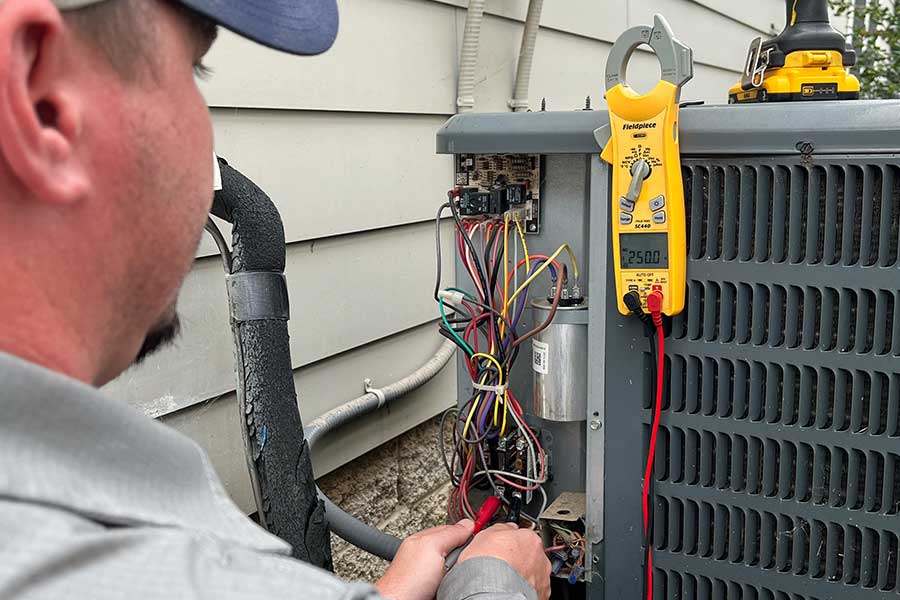
Instead of relying on an outdated mathematical shortcut, homeowners should seek guidance from a licensed, experienced HVAC professional who is willing to evaluate the complete picture.
At Parthenon, we believe homeowners deserve options—not pressure. That means taking the time to evaluate your system, explain what we’re seeing, and walk you through both repair and HVAC replacement solutions when appropriate.
A trustworthy contractor should be willing to discuss both repair and replacement options, explain the advantages and disadvantages of each, and help you understand the potential risks and benefits associated with your specific situation.
Most importantly, a reputable contractor should never avoid presenting a viable repair option simply because a HVAC replacement opportunity exists. The goal should be helping the homeowner make an informed decision—not steering them toward a predetermined outcome.
Our goal isn’t to sell you a system. It’s to help you make a confident decision that’s right for your home, your comfort, and your budget.
There is nothing wrong with discussing replacement options when they are appropriate. In fact, presenting multiple solutions is often a sign of professionalism. However, if the conversation focuses exclusively on HVAC replacement or relies heavily on the “$5,000 Rule” as the primary justification, it may be wise to seek a second opinion.
Final Thoughts
The “$5,000 Rule” may have served as a simple guideline decades ago, but today’s HVAC industry is far more complex than a basic age-times-repair-cost calculation can account for.
Your HVAC system is one of the largest mechanical investments in your home. Decisions regarding HVAC replacement or repair should be based on the condition of the equipment, the nature of the repair, your future plans, and the overall value being provided—not an outdated formula developed for a very different marketplace.
When faced with a significant HVAC repair, don’t ask whether the numbers exceed $5,000. Ask whether the recommendation makes sense for your home, your comfort, and your long-term financial goals.
The right decision isn’t always the least expensive option, and it isn’t always HVAC replacement. The right decision is the one that gives you confidence in your home’s comfort, reliability, and long-term value.
Not Sure Whether to Repair or Replace?
If you’re facing a major HVAC repair in Nashville or the surrounding areas, our team can help you evaluate your options. We’ll explain the condition of your system, discuss both repair and HVAC replacement solutions, and provide upfront pricing so you can make an informed decision with confidence.
Schedule an HVAC evaluation with Parthenon today and get expert guidance you can trust.