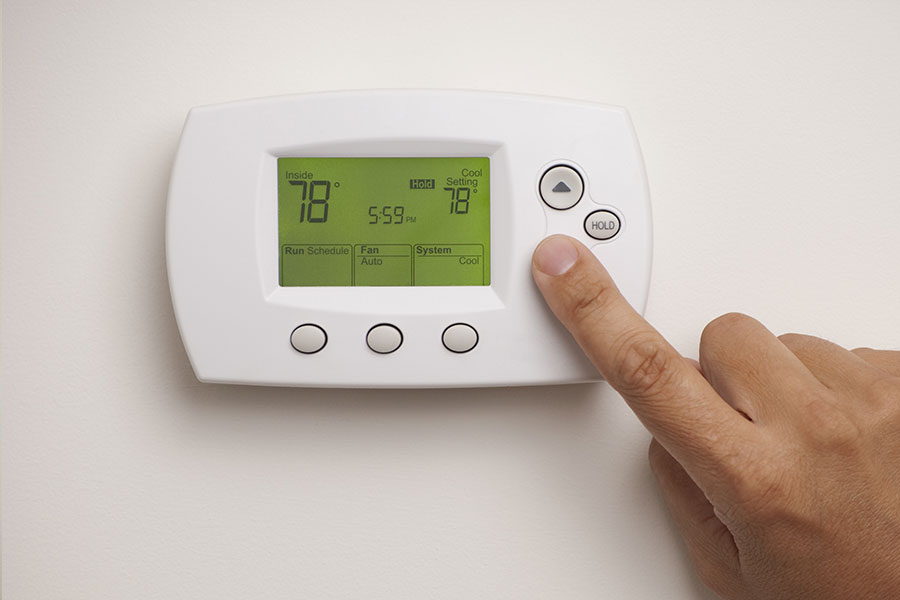
Most thermostat problems come down to one of five causes: a worn-out power source, a loose or damaged wiring connection, dust interfering with the sensor inside, poor placement near a heat source or draft, or a unit that has simply reached the end of a long life. The signs are easy to recognize, even though the causes are not: rooms that do not match the setting, controls that do not respond, a system switching on and off more than it used to, or a message on the display. A thermostat quietly controls your whole comfort system, so when it drifts, the effects show up everywhere.
In our work throughout 12 South, thermostat issues are frequently misdiagnosed as HVAC equipment failures. The system gets blamed when the actual problem is a control giving it bad instructions. That distinction is worth establishing early because it changes what the repair costs, and it is one of the first things our technicians check on AC services in 12 South calls.
What Should You Notice When Your Thermostat Acts Up?
The most useful thing you can do is pay attention to the pattern. A thermostat rarely fails all at once, and how it misbehaves tells a technician a great deal before anyone opens anything up.
Notice whether the problem is constant or comes and goes. Intermittent behavior, where the system works fine for a day and then does not, usually points to something other than a display that has gone dark and stayed dark.
Notice whether the temperature on the wall matches how the room actually feels. A gap between the two is one of the more telling signs, and it is something you can observe just by living in the space.
Notice whether the system is running more often than it used to, switching on and off in short bursts rather than settling into longer, steadier cycles. And notice when it started. If the change lined up with a season turning, a power flicker, or work done elsewhere in the house, that context helps.
What You Can Fix Yourself Before You Call
Several of the most common thermostat complaints have a homeowner-level fix attached to them, and none of them require opening the wall or touching a wire. Work through these in order before you book anything. Each takes a few minutes, and any one of them can end the problem outright.
- Replace the batteries. A weak battery is the single most common cause of a blank display, a frozen screen, or a system that responds one day and not the next. Use fresh alkaline batteries rather than partly used ones from a drawer, and note the date somewhere so you know when the next change is due.
- Check the breaker and the service switch. Find the HVAC breaker in your panel and confirm it has not tripped. Then check the service switch near the indoor unit, which looks like an ordinary light switch and gets flipped off by accident more often than you would expect. A blank thermostat with a tripped breaker behind it looks like a dead thermostat, but it is not.
- Confirm the mode and the setpoint. Make sure the unit is set to heat or cool rather than off or auto-changeover, and that the setpoint is actually calling for the temperature you want. If the thermostat runs a schedule, check whether a programmed setback is holding a temperature you did not choose. A hold or vacation mode left on after a trip explains a surprising number of service calls.
- Wipe the housing clean. Dust settling on the internal sensor pulls readings off. Remove the faceplate if it comes off without tools, and clear visible dust gently with a soft brush or a dry cloth. Do not spray anything into the housing.
- Check your air filter and your vents. A clogged filter or blocked supply registers make rooms miss the setting, no matter what the thermostat does. If certain rooms are the problem and others are fine, start here rather than at the thermostat.
If none of that changes anything, stop there. What remains is low-voltage wiring, the control board, or the equipment itself, and diagnosing those takes meters and manufacturer specifications rather than trial and error. Going further without the right tools risks damaging parts that cost considerably more than the thermostat. At that point, professional thermostat repair sorts out whether the control, the wiring, or the equipment is responsible.
How Do You Identify a Malfunctioning Thermostat?
A thermostat is malfunctioning when room temperatures do not match the setting, the controls do not respond to adjustment, the system cycles on and off too frequently, or the display shows error codes. These four symptoms cover the large majority of thermostat failures.
Here is what each one indicates:
- Inconsistent temperatures: If some rooms feel noticeably warmer or cooler than the setting suggests, the thermostat may be reading the space incorrectly. This is especially common in the older 12 South bungalows and craftsman homes, where a thermostat sits on an exterior wall or near a window, both of which produce false readings.
- Unresponsive controls: Adjusting the setting with no change in system behavior points to a failed control, a wiring fault, or a loss of communication with the equipment.
- Frequent cycling: A system that turns on and off more often than it used to is short cycling, which wastes energy and puts real wear on the compressor and blower motor. A faulty thermostat is one of several possible causes and is worth ruling out early.
- Error messages: Digital thermostats display codes for specific faults. Those codes are diagnostic information, and they tell a technician a great deal about where to look.
Addressing these promptly through a full HVAC diagnostic protects the rest of your system. A thermostat sending bad signals makes expensive equipment behave in ways it was never designed to.
When Should You Get Help From a Pro for Thermostat Repairs?
Call a professional when your heating or cooling system does not respond to the thermostat, when temperature readings are consistently inaccurate, when the system short-cycles, or when the battery, breaker, and setting checks above have not resolved the issue.
Persistent problems deserve attention rather than tolerance. Short cycling and erratic temperature swings are not just annoyances. They shorten the life of your HVAC equipment and raise your operating costs every month they continue.
Age is another factor worth weighing. Thermostats installed a decade or more ago frequently lack the accuracy of current models and are increasingly incompatible with modern equipment. Many 12 South homes have been renovated over the years with newer HVAC systems installed behind original plaster walls, and in a meaningful number of those, the thermostat was never updated to match. When you are dealing with frequent breakdowns on an older control, upgrading to a newer thermostat often resolves problems that repeated repairs never quite fix.
A technician can also identify issues that are invisible from the wall, including wiring faults, control board problems, and equipment-side failures that produce thermostat-like symptoms. That distinction matters because replacing a perfectly good thermostat does nothing for a problem that lives in the air handler.
If you are uncertain, have it checked. Expert diagnosis takes far less time than working through possibilities one at a time, and it extends the lifespan of both the thermostat and the system it controls.
What Thermostat Maintenance Actually Helps?
Thermostat maintenance is straightforward and worth doing consistently, because a well-maintained control keeps your home comfortable and your energy costs predictable.
- Keep it clean: Dust and dirt accumulate inside the housing and affect sensor accuracy. Gently wipe the exterior and remove visible debris.
- Replace batteries annually: On battery-powered units, changing them once a year prevents the intermittent failures that weak batteries cause. Pick a date you will remember and stick to it.
- Verify accuracy: Place a separate thermometer near the thermostat and compare readings. A difference of more than a degree or two suggests the unit needs calibration or replacement.
- Have wiring inspected: Loose or corroded low-voltage connections cause intermittent operation and are best checked by a technician during routine service rather than investigated at the wall.
- Address problems early: Small control issues that get corrected quickly do not become equipment problems. That is the entire value of catching them.
What Happens When a Technician Looks at Your Thermostat
When a technician comes out, the first thing they establish is whether the thermostat is actually the problem. That sounds obvious, and it is the step that gets skipped most often.
They compare what the thermostat is reading against the real temperature of the room, which reveals whether the unit has drifted out of accuracy or is simply reporting a room that genuinely feels that way. They confirm the unit is getting power properly, since a blown fuse or a tripped circuit produces a blank display that looks far more serious than it is.
They also look at where the thermostat lives. A unit mounted where the afternoon sun reaches it, near a lamp, above a supply vent, or on a wall backing an unheated space will read the room incorrectly, no matter how well it is working. Homes along the 12th Avenue South corridor with original window placement and later HVAC retrofits run into this often, because the thermostat location was frequently chosen for wiring convenience rather than accuracy. Relocating it is sometimes the permanent answer to a problem that repeated adjustments never solved.
From there, the diagnosis moves into the wiring and the equipment, where the answer usually lives when the simple explanations have been ruled out.
The result is that you find out what is actually wrong, once, rather than replacing a perfectly good thermostat and still having the same complaint.
What the ATHENA Smart Thermostat Changes
Everything above has the same limitation built into it: a thermostat cannot tell you it is drifting. You find out when a room feels wrong, when the bill arrives, or when a technician confirms what you suspected weeks earlier. The ATHENA smart thermostat is our answer to that lag, and it is the thermostat we install in Parthenon Partners homes.
ATHENA is built to connect directly with Parthenon, and that connection is the point. Instead of sitting on the wall reporting only to itself, it gives our team visibility into how your system is actually performing between visits, which means a developing problem can be raised while it is still small.
Here is what it gives you day to day:
- Remote system health monitoring: your equipment’s performance is visible to our team, not only to you.
- System performance alerts: you hear about a developing issue instead of discovering it.
- Indoor air quality alerts: the same control that manages temperature flags air quality changes in the home.
- Unlimited HVAC virtual visits: a technician can review what the system is doing without anyone coming out, which settles a fair number of questions on the spot.
- Mobile app control and smart climate scheduling: adjust the house from anywhere and set a schedule that matches how your household actually lives in it.
- On-screen tap-to-call: reach us from the thermostat itself when something does need a visit.
For an older 12 South home, the accuracy and scheduling matter most. A control that holds a real schedule and reads the room correctly does more for a retrofitted system behind original plaster walls than any amount of manual adjusting ever will.
ATHENA is not something you buy off a shelf. It is exclusive to Parthenon Partners on the Athena Plan, which runs $25 a month and includes every benefit of our Guardian maintenance plan alongside the ATHENA thermostats themselves, installed at no charge. On the Guardian side, that means two HVAC inspections a year, an annual plumbing inspection, an annual water heater flush, 20 percent off repairs, 10 percent off replacements and new equipment installations, and no dispatch fees Monday through Friday. The full benefit list and eligibility details are on the Parthenon Partners Residential Program page.
Keeping 12 South Homes Comfortable Year-Round
A thermostat is a small device with a surprising amount of say over how comfortable your home feels and what it costs to keep it that way. Rooms that will not match the setting, controls that ignore you, and a system that cycles more than it used to are all fixable. Start with the batteries, the breaker, and the settings. If those come up clean, the rest is ours to sort out.
When you do call, you get honest pricing with the cost known up front and no hidden fees, expert solutions from licensed technicians with over 150 years of combined experience, and the unmatched care that has kept Middle Tennessee neighbors calling us back since 2008. If your thermostat is not behaving the way it should, contact our team today. Service That Stands the Test of Time is what we want your comfort to feel like.
Frequently Asked Questions
Why is my thermostat reading the wrong temperature?
The most common causes are dust on the internal sensor, poor placement near a heat source or draft, or a unit that has drifted out of calibration with age. Compare the thermostat’s reading against a separate thermometer placed nearby to confirm the gap. If cleaning does not correct it, the thermostat likely needs calibration or replacement.
How do I reset a thermostat that is not responding?
Start with fresh batteries, then check that the HVAC breaker has not tripped and that the service switch near the indoor unit is on. Many digital models are also reset by pulling the faceplate off the wall plate for about thirty seconds and reseating it. If the display stays blank or unresponsive after all three, the problem is in the wiring or the control itself and needs a technician.
How long do thermostats last?
Most thermostats last around 10 years, though many continue operating well past that point with reduced accuracy. Older units also increasingly lack compatibility with modern variable-speed and heat pump equipment. If yours is a decade old and you are experiencing recurring issues, a replacement is generally more economical than repeated repairs.
Can a bad thermostat make my energy bills go up?
Yes. A thermostat that misreads the room causes the system to run longer than necessary or cycle on and off too frequently, and both patterns consume noticeably more energy than normal operation. Short cycling in particular is inefficient, because starting the equipment draws far more power than steady running does. Correcting the control often reduces the bill without any change to the HVAC equipment.
Is a smart thermostat worth installing in an older 12 South home?
It can be, provided the wiring supports it. Many older homes in the 12 South area have low-voltage wiring installed before smart thermostats existed and lack the common wire most models require, though this is usually solvable during installation. The benefit is real: better scheduling, remote adjustment, and more accurate temperature control. Have a technician confirm compatibility with your existing equipment before purchasing a specific model.
What is the ATHENA smart thermostat?
ATHENA is the smart thermostat Parthenon installs for members on the Athena Plan. It handles the features you would expect from a smart control, including app access, remote adjustment, and climate scheduling, and it also connects directly with our team so system health, performance, and indoor air quality alerts reach us. It is available only through Parthenon Partners and is not sold separately.
How do I get an ATHENA thermostat in my 12 South home?
Join the Athena Plan through the Parthenon Partners Residential Program at $25 a month. The plan includes the ATHENA thermostats installed at no charge, everything in the Guardian maintenance plan, and unlimited HVAC virtual visits. The plan covers homeowner-occupied homes inside our service area, so rentals and commercial buildings are not eligible, and you will need Wi-Fi plus a smartphone or tablet for the app features.