It is time for a dehumidifier when you see mold or mildew forming, smell a persistent musty odor, notice condensation on windows, or feel damp walls and floors. Indoor humidity above 60 percent is the threshold where these problems begin, and Middle Tennessee summers push many homes well past it. A dehumidifier lowers moisture levels, improves air quality, protects wood and drywall from damage, and makes your home feel cooler at the same thermostat setting. For Crieve Hall homeowners, it is one of the most effective upgrades available for summer comfort.
Based on what we see in Crieve Hall homes, humidity is a bigger comfort problem than temperature for a large share of the year. The neighborhood’s mid-century ranch homes, most built in the 1950s and 1960s over crawl spaces, are particularly susceptible to it.
What Are the Signs Your Home Is Too Humid?
Your home has a humidity problem if you notice mold or mildew, a musty smell, condensation on windows, damp surfaces, worsening allergy symptoms, or a persistent sticky feeling even with the AC running.
Mold or mildew in corners, bathrooms, or along baseboards is the most direct evidence. It does not appear without sustained moisture, and finding it means the conditions have been in place for a while.
A musty smell is often the earliest indicator, arriving before anything is visible. That odor comes from microbial growth in materials holding moisture, frequently in a crawl space or behind a wall rather than in the room where you smell it.
Condensation on windows means humid indoor air is meeting cooler glass and giving up moisture. Feeling sticky or uncomfortable in hot weather despite a reasonable thermostat setting points the same direction, because humid air prevents your body from cooling efficiently no matter what the temperature reads.
Check whether walls or floors feel damp to the touch. In Crieve Hall’s ranch homes, this frequently traces to crawl space moisture migrating upward through the floor system, which is a structural issue as much as a comfort one. Middle Tennessee’s clay soil holds water well after heavy rain, and that moisture works its way into unsealed crawl spaces throughout the neighborhood.
Frequent allergy symptoms are worth noting too, since elevated humidity supports dust mite populations and mold growth, both of which are significant indoor allergens.
Finally, if you run the air conditioning constantly without ever feeling comfortable, the issue may not be the heat at all. Working with clients across Crieve Hall, we regularly find that homes struggling through summer need moisture control rather than more cooling capacity, and AC services in Crieve Hall start with identifying which problem you actually have.
What Are the Benefits of Installing a Dehumidifier?
A dehumidifier improves air quality, protects your home’s structure and belongings, reduces strain on your HVAC system, and makes your living space feel more comfortable at a higher thermostat setting.
Air quality improves first and most noticeably. Reducing humidity limits dust mite populations and suppresses mold growth, which matters directly for anyone in the household managing allergies or asthma. Breathing becomes easier in a space where moisture is under control.
Structural protection is the benefit homeowners tend to underestimate. Excess moisture leads to wood rot, warped flooring, swollen door frames, and damage to furniture and stored items. In older Crieve Hall homes with original hardwood floors and wood subfloor systems, sustained high humidity causes cumulative damage that is expensive to reverse. Controlling moisture prevents it entirely.
Your HVAC system also benefits. Air conditioning removes some humidity as a byproduct of cooling, but in a genuinely humid house it carries that load inefficiently and runs longer to do it. A dedicated dehumidifier handles moisture directly, which allows the cooling system to run shorter cycles and can lower energy costs. Pairing moisture control with routine cooling system maintenance is where homeowners see the clearest efficiency gains.
Comfort improves in a way that surprises people. Drier air feels cooler at the same temperature, which means many homes can raise the thermostat by two or three degrees after adding dehumidification and feel better than they did before.
How Do You Choose the Right Dehumidifier?
The right dehumidifier depends on the square footage you need to treat, the severity of your humidity problem, and whether you want to address the whole home or a single space. Getting the sizing right matters more than any other specification.
Measure the area you intend to control. Portable units are generally suited to single rooms under 500 square feet. Larger areas, and any situation where the humidity problem affects the whole house, call for a whole home unit integrated with your HVAC system.
Assess the severity. If indoor humidity consistently sits above 60 percent, you need meaningful capacity rather than a marginal unit that runs continuously without ever reaching target. Undersizing is the most common mistake we see, and it produces a unit that runs constantly, costs money to operate, and never quite solves the problem.
Energy efficiency is worth attention since a dehumidifier in a Tennessee summer runs a lot. Look for the Energy Star label, and factor operating cost into the comparison rather than looking at purchase price alone.
Features matter depending on your situation. A built-in condensate pump allows continuous drainage rather than emptying a reservoir, which is essentially required for any unit running through a Middle Tennessee July. A built-in humidistat maintains a target level automatically instead of running on a fixed schedule.
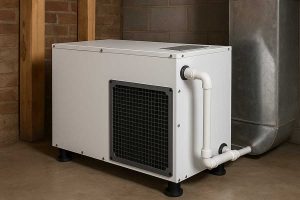
For most Crieve Hall homes with crawl space moisture and whole house humidity, a portable unit treats a symptom in one room while the underlying condition continues elsewhere. That is the situation where whole home dehumidifier installation makes considerably more sense, because it addresses the entire volume of air the house circulates.
How Do You Maintain a Dehumidifier?
Dehumidifier maintenance comes down to managing drainage, keeping the filter clean, and monitoring performance. Each takes minutes and directly affects how well the unit works.
Check the water reservoir regularly on portable units, or verify the drain line is clear on units with continuous drainage. A clogged drain line is the single most common cause of a dehumidifier that appears to stop working.
Clean or replace the air filter every few months. Dust and debris restrict airflow across the coil and reduce moisture removal capacity significantly. Wipe down the exterior and confirm the intake is not blocked by furniture or stored items.
Inspect the coils for frost buildup, which happens when the unit operates in temperatures below its designed range. If frost forms, adjust the settings or relocate the unit to a warmer area. In an unheated Crieve Hall crawl space during a cold snap, this is a real consideration.
Monitor humidity levels with a separate hygrometer to confirm the unit is actually maintaining the range you want. Target 45 to 50 percent for most homes, which is comfortable without being so dry that it creates its own problems.
Whole home systems integrated with your HVAC equipment should be serviced during regular maintenance visits, where a technician can verify drainage, check the humidistat calibration, and confirm the unit is performing to specification. Some homes with persistent air quality concerns also benefit from combining moisture control with UV air purification systems, which address biological contaminants that humidity control alone does not fully resolve.
Consult the manufacturer’s documentation for model-specific recommendations, and stay consistent with the basics. A well-maintained unit protects your home from excess moisture reliably for years.
Should You Install a Dehumidifier Yourself or Hire a Professional?
Portable dehumidifiers require no installation beyond plugging them in and arranging drainage. Whole home dehumidifiers integrate with your ductwork, electrical system, and condensate drainage, and those should be installed professionally.
The distinction is practical rather than a matter of skill. A whole home unit has to be tied into the supply or return side of the duct system at the correct location, wired appropriately, and drained to a suitable point. Getting any of those wrong produces a unit that underperforms, short cycles, or creates a new moisture problem where the condensate ends up. In older Crieve Hall homes where the air handler sits in a tight closet or crawl space, the installation also has to account for limited access and existing ductwork that was not designed with a dehumidifier in mind.
Professional installation through Parthenon Plumbing, Heating, & AC Repair means the unit is correctly sized for your home, positioned where it will actually control humidity throughout the house, and integrated so it works alongside your cooling system rather than against it. We provide upfront, competitive pricing with no hidden fees and back the work with a satisfaction guarantee.
Weigh your situation honestly. A portable unit for a single damp room is a reasonable purchase to handle yourself. A whole home solution is an investment in your house, and it should be installed by someone who does it regularly.
Taking Control of Humidity in Your Crieve Hall Home
Excess humidity is a quiet problem. It rarely announces itself the way a broken air conditioner does, and it does its damage gradually through mold growth, wood damage, allergy symptoms, and a house that never quite feels comfortable. The signs are consistent and easy to read once you know them: musty odors, condensation, damp surfaces, and that sticky feeling that persists no matter how low you set the thermostat. Crieve Hall’s ranch homes and crawl space construction make the neighborhood particularly worth paying attention to. If your home is showing any of these signs, there is a straightforward answer waiting.
You can expect honest pricing with the cost known before anything starts, expert solutions from licensed technicians with over 150 years of combined experience who will size the right unit for your home rather than the easiest one to sell, and unmatched care from a team that has served this community since 2008. Book a consultation and we will find out what is actually driving the moisture. Service That Stands the Test of Time is the comfort we want your family to settle into.
Frequently Asked Questions
What humidity level should I maintain in a Nashville home?
Aim for indoor relative humidity between 45 and 50 percent. Below 30 percent, air becomes dry enough to affect wood floors, furniture, and comfort. Above 60 percent, you enter the range where mold growth, dust mites, and structural moisture damage become active concerns. Middle Tennessee summers routinely push unmanaged homes above that upper threshold.
Will my air conditioner handle humidity on its own?
Only partially. Air conditioning removes moisture as a byproduct of cooling, but it is designed to control temperature, not humidity. On mild, humid days when the system does not run long enough to dehumidify, or in homes with significant moisture intrusion from a crawl space, the AC alone falls short. That is when a dedicated dehumidifier becomes worthwhile.
Does a dehumidifier lower cooling costs?
It can. Drier air feels cooler, which means many households find they can raise the thermostat by two or three degrees and remain equally comfortable. That reduces cooling runtime and energy consumption. The dehumidifier itself consumes power, so the net savings depend on your specific situation, but the comfort improvement is consistent.
Why is my Crieve Hall home humid even with the AC running?
The most common causes in this area are crawl space moisture migrating into the living space, an oversized air conditioner that cools quickly without running long enough to dehumidify, and inadequate ventilation. Crieve Hall’s mid-century ranch homes over crawl spaces are especially prone to the first. A technician can determine which factor is driving the problem, since the solution differs substantially depending on the cause.