Call for ductwork repair when you notice rattling or whistling sounds in your vents, rooms that never reach the same temperature, weak airflow, or a jump in your energy bills with no change in how you use your system. These symptoms almost always trace back to leaks, disconnected joints, blockages, or poor insulation inside the duct runs. Left alone, damaged ductwork forces your HVAC system to work harder, drives up operating costs, and pulls dust and moisture into the air you breathe. A professional inspection identifies exactly where the loss is happening and what it will take to correct it.
In our work throughout Nashville, ductwork is one of the most overlooked parts of a home comfort system. Homeowners tend to focus on the equipment itself, the furnace and the outdoor condenser, while the network that actually delivers the conditioned air sits out of sight in an attic or crawl space. That is where the problems start.
What Are the Most Common Ductwork Problems Nashville Homeowners Face?
The most common ductwork problems are air leaks at seams and connections, blockages, improper duct sizing, failing insulation, and accumulated dust and debris inside the runs. Each one reduces how much conditioned air actually reaches your living space.
Leaks are the single biggest offender. When conditioned air escapes into an attic or crawl space before it reaches a room, your system runs longer to compensate, and your energy bills climb. Based on what we see in Nashville homes, this is especially common in older properties around East Nashville and Sylvan Park, where the duct system has been modified over the years by different contractors, and where sealing standards were far looser when the work was done.
Uneven heating and cooling is another frequent complaint. If one bedroom sits five degrees warmer than the rest of the house, the cause is usually a blockage, a crushed flex duct run, or ducts sized incorrectly for the space they serve. Poor insulation compounds all of it. Ductwork running through an unconditioned Middle Tennessee attic in August can lose a significant portion of its cooling capacity before the air ever reaches a register.
Dirty ducts circulate allergens and dust throughout the house, which matters in a climate where windows stay closed for much of the year. Unusual noises like rattling or whistling point to loose connections, damaged sections, or air being forced through an undersized opening. Strange odors coming through the vents can signal moisture, mold, or debris buildup inside the system.
Recognizing these issues early is what keeps a small repair from turning into a full duct replacement. Regular attention from a technician who handles air conditioning services in Nashville every day will catch developing problems well before they affect your comfort or your utility costs.
How Do You Know If Your Ductwork Needs Repairs Right Now?
Your ductwork needs immediate attention if you hear unusual noises from the vents, notice inconsistent temperatures between rooms, or see an unexplained increase in your energy bills. Any one of these on its own is worth investigating. Two or more together almost always mean the duct system is losing air.
Here are the three indicators that should prompt a call:
- Unusual noises: Rattling, whistling, or hissing sounds coming from your ducts point to loose components, separated joints, or air escaping through a gap. Whistling in particular usually means pressurized air is finding an opening it should not have.
- Inconsistent temperatures: Cold or hot spots in specific rooms indicate leaks, blockages, or duct runs that were never balanced correctly. This is one of the clearest signs the delivery system, not the equipment, is the problem.
- Increased energy bills: A sudden spike in utility costs without a change in your habits means your system is running longer to hit the same setpoint. Catching the cause early through a full system diagnostic prevents a minor loss from becoming a permanent drain on your budget.
If you spot any of these warning signs, have the system evaluated rather than waiting to see if it resolves on its own. Duct problems do not improve with time, and the cost of running an inefficient system compounds every month.
Timely repairs protect both your budget and your comfort through the full swing of Nashville seasons, from humid July afternoons to the cold snaps that arrive in January.
How Does Poor Ductwork Affect Your Indoor Air Quality?
Poor ductwork directly degrades indoor air quality by pulling dust, allergens, and moisture from unconditioned spaces and distributing them through every room in your home. Damaged or leaking ducts do not just fail to deliver air efficiently. They actively become a pathway for contaminants.
When a duct run has gaps at the seams, negative pressure draws in whatever surrounds it. In a Nashville crawl space, that means humidity, soil odors, insulation fibers, and fine particulate. In an attic, it means dust and heat. All of it ends up in the air, circulating through your living room. For anyone in the household managing asthma, seasonal allergies, or general respiratory sensitivity, the effect is immediate and noticeable.
You might see dust settling on surfaces faster than it should, or catch a musty smell when the system first kicks on. Both are signs the duct system needs attention. Inefficient airflow also makes your heating and cooling equipment work harder, which raises energy costs while doing nothing to improve comfort.
Middle Tennessee humidity adds another dimension. Damp or unsealed ducts create conditions where bacteria and mold can establish themselves inside the system. Once that happens, cleaning alone may not be enough, and sections of the run may need to be replaced. Homeowners who stay ahead of this with routine attention and prompt professional AC repair when symptoms appear avoid the larger remediation entirely.
Clean, efficient air delivery is not a luxury feature. It is the baseline for a home that feels comfortable and supports the health of the people living in it.
Why Timely Ductwork Repairs Are Essential
Timely ductwork repairs are essential because delayed action raises your energy costs, degrades your indoor air, and shortens the working life of your HVAC equipment. The longer a leak or blockage goes uncorrected, the more strain accumulates on the system.
Three reasons to move quickly:
- Energy efficiency: Sealed, properly insulated ductwork means the air your system produces actually reaches the rooms it was intended for. That translates directly into lower monthly operating costs.
- Air quality: Leaks and blockages introduce dust, allergens, and pollutants into circulation. Correcting them removes the pathway entirely rather than just filtering the result.
- System longevity: An HVAC system fighting a leaking duct network runs longer cycles and cycles more often. Both accelerate wear on the compressor, blower motor, and heat exchanger. Pairing duct repairs with seasonal maintenance and tune-ups is the most reliable way to protect the investment you have already made in your equipment.
Working with clients across Nashville, we consistently find that the homes with the lowest lifetime HVAC costs are the ones where duct issues were addressed the season they appeared, not two or three summers later.
What Happens During a Ductwork Repair?
A ductwork repair begins with a full assessment of the system to locate leaks, blockages, and damaged sections, followed by targeted sealing, repair or replacement of the affected runs, and a final performance test. The process is diagnostic first and corrective second.
A technician inspects the accessible duct runs, checking joints, connections, insulation condition, and signs of wear or separation. Anything found gets explained clearly, along with an estimate, before work begins, so you know the scope and the cost up front.
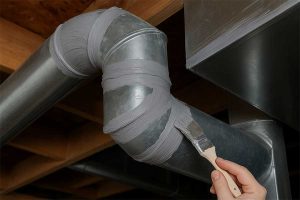
From there, the affected sections are isolated. Sealing is typically done with mastic or approved foil tape rather than standard duct tape, which fails within a few seasons in an unconditioned Tennessee attic. Damaged sections get repaired or replaced outright. Blockages are cleared. If the interior of the system shows significant buildup, a deeper cleaning may be recommended to restore airflow and improve the quality of the air moving through it.
Once the corrective work is complete, the system is tested to confirm airflow and temperature delivery have improved across every register. The technician then walks you through what was found, what was done, and what to watch for going forward.
Protecting Your Nashville Home’s Comfort Long Term
Ductwork sits out of sight, so it is completely understandable that it goes unnoticed until a room stops holding its temperature. Rattling vents, uneven rooms, a rising bill, and dust that keeps coming back are all the same message arriving in different ways, and each one is a small, fixable thing rather than a worry.
Catching it early costs a fraction of running an inefficient system for years. When you call, you get honest pricing with the cost known up front and no hidden fees, expert solutions from licensed technicians with over 150 years of combined experience, and the unmatched care of a company that has served Nashville since 2008. When you notice the signs, contact our team today. Service That Stands the Test of Time is what we build into every repair.
Frequently Asked Questions
How often should ductwork be inspected in a Nashville home?
Most Nashville homes benefit from a duct inspection every three to five years, and sooner if you notice airflow or temperature problems. Homes with ductwork in an unconditioned attic or crawl space tend to need attention on the shorter end of that range because of the temperature and humidity swings those spaces experience. An inspection is also worth scheduling any time you replace HVAC equipment, since older ducts may not match the airflow requirements of a new system.
Can leaking ductwork raise my energy bill?
Yes, and it is one of the most common causes of an unexplained increase. When conditioned air escapes into an attic or crawl space, your system runs longer cycles to reach the temperature you set, which raises energy consumption every single day. Homeowners often see a measurable drop in monthly costs after leaks are properly sealed.
Should I repair or replace my ductwork?
Repair is usually the right call when the damage is limited to specific joints, sections, or insulation. Replacement makes more sense when the system is widely deteriorated, badly undersized for the home, or has been modified repeatedly over the years into a configuration that cannot be balanced. A technician can tell you which situation you are in after a proper inspection, and the difference in cost between the two paths is significant enough to be worth confirming.
Does dirty ductwork actually affect allergies?
It can. Ducts that have accumulated dust, pollen, and debris redistribute those particles through the house every time the system runs. In Middle Tennessee, where pollen counts run high through spring and homes stay closed up through the humid summer, that recirculation is often what turns a mild seasonal reaction into a persistent one. Cleaning the system and sealing the leaks that let contaminants in addresses the cause rather than the symptom.