
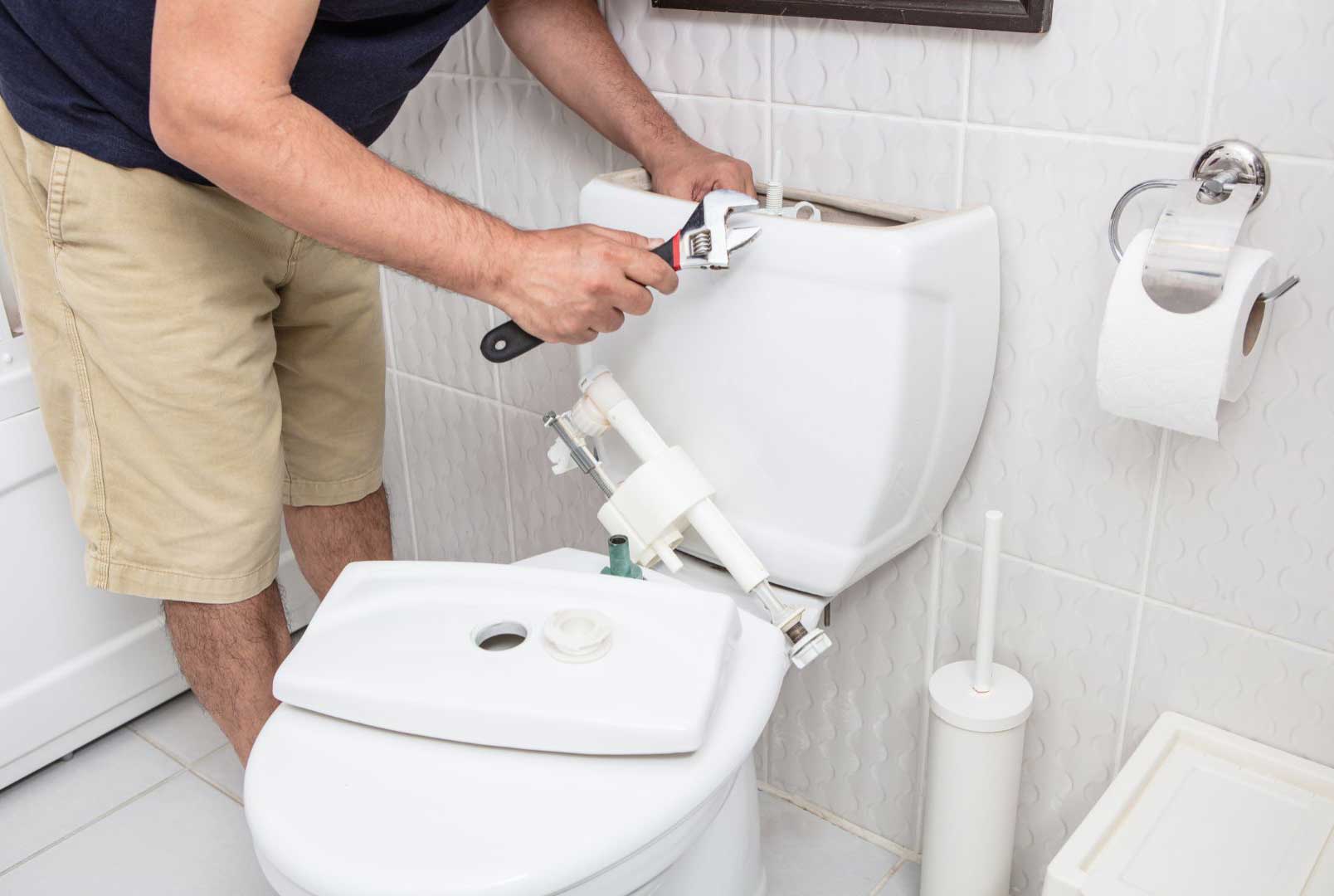
Seven signs indicate your toilet needs repair or replacement: water pooling around the base, frequent clogs, persistent bathroom odors, visible cracks in the bowl or tank, weak or incomplete flushing, an age of 25 years or more, and a water bill that keeps climbing. Any one of these warrants attention. Several together generally mean replacement is the better financial decision than continued repairs. Catching these early prevents water damage to the flooring and subfloor, which is far more expensive to correct than the toilet itself.
Based on what we see in Green Hills homes, the toilets that cause the most damage are rarely the ones that fail suddenly. They are the ones that leaked slowly for months while nobody noticed.
Water Leaks: Are You Seeing Puddles Around the Base?
Water pooling at the base of a toilet means the wax seal has failed, the closet bolts have loosened, or there is a crack in the fixture. None of these resolves on its own, and all of them get worse.
A failed wax seal is the most common cause. Every flush pushes a small volume of water past the failed seal and onto the subfloor. Because most of that water goes under the flooring rather than onto it, the visible puddle understates what is actually happening below.
You may also notice persistent dampness around the base, which leads to mold growth, deteriorating subfloor, and unpleasant odors that seem to have no clear source. Many Green Hills homes have original hardwood or tile over a wood subfloor, and sustained moisture in that assembly causes damage that requires far more than a plumbing repair to correct.
Timing matters here more than with most plumbing issues. A wax seal replacement caught early is a straightforward job. The same leak discovered after six months can mean subfloor replacement and flooring work.
If you are unsure of the source, our licensed technicians can identify it and correct it properly. We provide an upfront quote before any work begins, and we make sure the repair addresses the actual cause rather than just the symptom. Prompt attention from plumbers serving Green Hills is what keeps a seal replacement from becoming a floor replacement.
Addressing leaks early saves time, money, and considerable disruption to your home.
Frequent Clogs: Why Does This Sign Demand Immediate Attention?
Recurring toilet clogs indicate a problem beyond the fixture itself, typically a partial blockage in the drain line, a damaged internal component, or an older low-flow toilet that lacks adequate flush volume. Occasional clogs are normal. Frequent ones are a symptom.
The distinction matters. A toilet that clogs again and again is telling you that waste is not clearing the line properly, and that is a message about the drain rather than the fixture. It can mean buildup in the line, a section of pipe that has settled, or tree roots finding their way into an older sewer lateral. Green Hills has beautiful mature tree cover, and root intrusion into older clay and cast-iron lines is simply part of living with it.
Reaching for a chemical drain product each time treats the symptom while the underlying condition carries on. Those products can also be hard on older pipes and seals, which occasionally turns a manageable situation into a bigger one, so they are worth skipping in a home of this age.
There is a water cost as well. A toilet that requires multiple flushes to clear wastes a meaningful volume of water each month, which shows up on your utility bill.
The right approach is diagnostic. A camera inspection of the drain line, or a proper assessment of the fixture and its internal components, determines whether you are dealing with a toilet problem or a drain problem. Professional drain cleaning resolves blockages in the line itself, while fixture issues require a different fix entirely. Knowing which one you have prevents spending money in the wrong direction.
Unpleasant Odors: Is Your Bathroom Smelling Foul?
Persistent bathroom odors indicate a leak, a blocked plumbing vent, bacterial buildup, a sewer line problem, or a clogged drain. The specific character of the smell narrows down the cause considerably.
Sewer gas odors point toward a venting or seal problem. Musty smells point toward moisture and mold. Neither should be treated as a cleaning issue, because both indicate something structural in the plumbing.
What Are the Common Sources of Bathroom Odor?
The most frequent sources are:
- Toilet leaks: Water escaping past a failed seal creates sustained dampness under and around the fixture, which produces odor as materials stay wet.
- Blocked vents: Plumbing vents allow sewer gas to escape above the roofline. When one is obstructed, that gas finds its way into the house instead.
- Dirty toilet bowl: Bacterial buildup under the rim and in the trap produces odor that cleaning addresses, though it recurs quickly if there is an underlying moisture issue.
- Sewer line issues: A cracked or broken sewer line releases gas and creates an odor that is often strongest in the lowest level of the home.
- Clogged drains: Organic material decomposing in a slow drain produces odor continuously until the line is properly cleared.
Identifying which source applies determines the fix, and several of these require diagnostic equipment to confirm. Our technicians handle this regularly and can pinpoint the cause without guesswork.
What About Mold and Mildew?
Mold and mildew produce a distinctly musty odor and indicate trapped moisture somewhere near the fixture. That moisture has to be coming from a source, most often a slow leak or inadequate bathroom ventilation.
A musty smell in a bathroom is worth investigating rather than masking. Ignoring it allows growth to spread into wall cavities and subfloor, where remediation becomes substantially more involved and more expensive.
Check around the toilet base and under the sink for dampness. Green Hills bathrooms in older homes frequently have limited exhaust ventilation compared to current standards, which allows humidity from showers to linger and compounds any existing moisture problem.
If you find mold, address the water source rather than just the growth. Whether that means repairing a leak, improving ventilation, or replacing the fixture, correcting the cause is what prevents it from returning.
Cracks and Damage: What Signs Mean Your Toilet Needs Repair?
Visible cracks, water pooling, rust staining, unusual noises, and a toilet that rocks all indicate damage requiring attention. Cracks in particular tend to progress rather than hold steady.
Watch for these specific indicators:
- Visible cracks: Inspect the bowl and tank for hairline fractures, which often start small and expand under normal use and temperature changes.
- Water pooling: Water at the base indicates a seal failure or a crack in the fixture below the waterline.
- Rust stains: Discoloration around bolts and fittings signals corroding hardware, which eventually fails and allows movement.
- Unusual noises: Hissing or gurgling indicates a fill valve problem, a venting issue, or a partial blockage in the line.
- Wobbling toilet: A fixture that rocks has either failed closet bolts, a deteriorated flange, or a compromised subfloor beneath it. All three allow the seal to break repeatedly.
A cracked toilet cannot be reliably repaired. Once the porcelain is compromised, replacement is the only durable solution, and continuing to use it risks a sudden failure that releases a significant volume of water into your bathroom.
Working with clients across Green Hills, we typically recommend evaluating the whole installation when any of these appear, since a rocking toilet often reveals a flange or subfloor problem that needs correcting, regardless of which fixture goes back on top of it.
Flushing Issues: Is Your Toilet Failing to Flush Properly?
Weak or incomplete flushing generally comes from a partial blockage, worn parts inside the tank, or an aging low-flow design that never had enough force to begin with.
The seal inside the tank is the most common thing to wear out. When it stops holding properly, the tank runs quietly on its own. When it stops opening fully, the flush loses its force. Both are ordinary wear on a part that has done its job thousands of times.
How much water the tank holds matters as well. When the level drifts low, the flush simply does not have the force behind it that it used to.
A partial blockage further down the line creates exactly the same symptom from a completely different direction, which is why this one is genuinely hard to call from the outside. New parts inside the tank do nothing for a restriction downstream, and there is no way to tell the two apart without looking.
There is also a generational issue worth knowing about. Early low-flow toilets from the 1990s were widely underperforming, and many are still in service. If yours is from that era and has always flushed poorly, no amount of repair will fix a design limitation. Current high-efficiency toilet models use less water than those early designs while flushing considerably better, which makes replacement a genuine upgrade rather than a lateral move.
Persistent flushing problems after basic checks should be evaluated properly, since ignoring them can indicate a developing drain issue.
Old Age: When Is It Time to Replace Your Toilet?
A toilet should generally be replaced when it is over 25 years old, requires frequent repairs, shows visible cracks or leaks, runs constantly, or wastes water compared to current models.
Consider these markers:
- Frequent repairs: Regular service calls on the same fixture mean the cumulative repair cost is approaching replacement cost.
- Cracks or leaks: Visible damage will progress and eventually fail, often with more mess than a planned replacement involves.
- Constant running: A toilet that will not stop running wastes substantial water daily and typically indicates worn internals throughout.
- Low water efficiency: Toilets manufactured before the mid-1990s use several times the water per flush of current models, and that difference shows on every bill.
- Age over 25 years: At that point, parts availability, efficiency, and accumulated wear generally favor replacement.
Green Hills has a substantial number of homes built in the mid-twentieth century, and many still have original or early-replacement fixtures in secondary bathrooms. Those toilets often work well enough that nobody thinks about them, right up until a seal fails or the tank cracks. Planning a replacement is considerably less disruptive than reacting to a failure.
Replacing an aging toilet improves efficiency, reliability, and comfort, and the water savings alone offset a meaningful portion of the cost over time.
Rising Water Bills: Is Your Water Bill Increasing?
An unexplained increase in your water bill frequently traces to a leaking or continuously running toilet. A toilet leaking silently into the bowl can waste hundreds of gallons per day without any visible sign.
This is the most overlooked cause of high water bills because it produces no puddle and often no sound. The water goes directly from the tank into the bowl and down the drain.
There are signs if you look for them. You may hear water running intermittently when nobody has flushed, or notice a faint continuous trickle in the bowl. Water pooling around the base indicates a different leak but the same underlying urgency.
A constantly running toilet is not just a cost issue. It indicates worn internal components that will continue degrading, and in some cases, it points to a fill valve problem that can eventually overflow the tank.
Worn parts inside the tank are the usual culprits, and replacing them is a small job. When repairs stop holding, a water-efficient replacement model solves it for good while using noticeably less water.
Our team can find the cause quickly and tell you honestly whether repair or replacement is the better value for your particular fixture. Honest pricing means you know the cost before any work begins, with no hidden fees. Comprehensive toilet repair and installation means you get the right answer rather than the easy one.
Protecting Your Green Hills Home From Toilet Trouble
Toilets give plenty of warning before they give out. Puddles, repeat clogs, odors, cracks, weak flushes, age, and a climbing water bill are all easy to spot once you know them, and every one is simpler and less expensive to handle early. Green Hills homes with original flooring have a little more to protect, which is the only reason it is worth keeping half an eye out.
You will not need to work out which of the seven you are looking at. That is our job, and you can expect expert solutions from licensed technicians with over 150 years of combined experience, plus the unmatched care that comes from treating a neighbor’s home the way we would want ours treated. If your toilet is telling you something, contact our team today. Service That Stands the Test of Time is what we leave behind.
Frequently Asked Questions
How long does a toilet last in a Green Hills home?
The porcelain fixture itself can last 40 to 50 years, but the internal components generally need replacement every five to seven years, and overall performance declines well before the porcelain fails. Most plumbers recommend evaluating replacement around the 25-year mark, when efficiency, parts availability, and accumulated wear start favoring a new unit. Homes with hard water may see components wear faster.
Is a running toilet an emergency?
It is not an emergency in the sense of requiring immediate response, but it should be addressed within days rather than weeks. A continuously running toilet can waste a substantial volume of water daily, which becomes expensive quickly. It also indicates worn components that will continue degrading until something fails more disruptively.
Should I repair or replace a toilet that keeps clogging?
First, determine whether the problem is the toilet or the drain line. If other fixtures in the home also drain slowly, the issue is in the line and replacing the toilet will not help. If the toilet alone clogs repeatedly and it is an older low-flow model, replacement with a modern high-efficiency unit usually resolves it. A proper diagnosis before purchasing anything saves money in both directions.
Why does my bathroom smell even after cleaning?
Persistent odor after cleaning almost always means the source is not in the room’s surfaces. The most common causes are a failed toilet seal releasing sewer gas, a blocked plumbing vent, a dry floor drain trap, or mold growing in a wall cavity from a slow leak. In older Green Hills homes with original plumbing vents and limited bathroom ventilation, vent obstruction and moisture accumulation are both worth checking.